
Atlas of Urban Semiotics
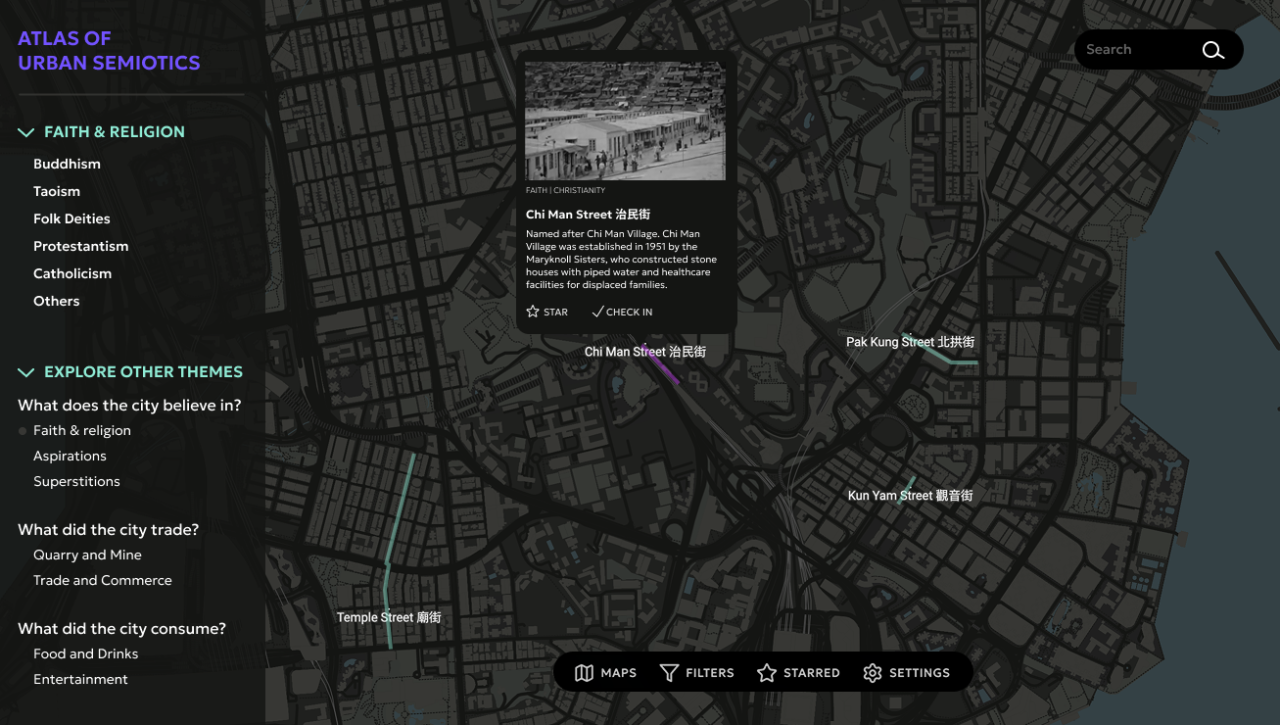
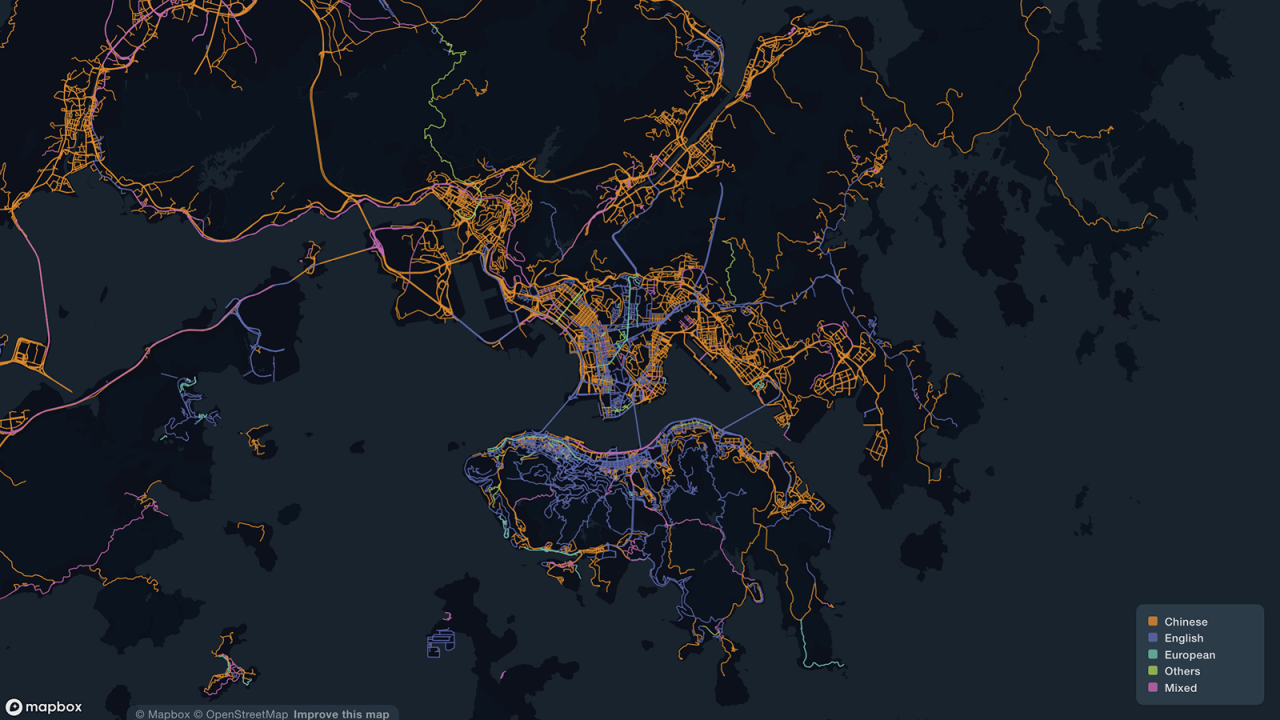

Street names are the most ubiquitous yet overlooked feature of our built environment. In Hong Kong, where roads cover just 4.2% of the territory, over 4,000 names form a complex semiotic web, each one embedding stories that reveal colonial legacies, gender imbalances, and geomantic aspirations. The “Atlas of Urban Semiotics” is a digital platform representing the culmination of multi-year research that uncovers these narratives, transforming them into an immersive, spatial storytelling experience. By integrating interactive mapping with layered thematic essays, the web platform invites users to navigate the city as a living text. The Atlas serves as both an open public resource and a critical design intervention, utilising digital interaction to reveal how naming conventions shape our perception of urban space. It preserves intangible heritage while empowering the public to explore the systemic biases and cultural dreams etched into the very fabric of their neighbourhoods.
Street names are the most ubiquitous yet overlooked feature of our built environment. In Hong Kong, where roads cover just 4.2% of the territory, over 4,000 names form a complex semiotic web, each one embedding stories that reveal colonial legacies, gender imbalances, and geomantic aspirations. The “Atlas of Urban Semiotics” is a digital platform representing the culmination of multi-year research that uncovers these narratives, transforming them into an immersive, spatial storytelling experience. By integrating interactive mapping with layered thematic essays, the web platform invites users to navigate the city as a living text. The Atlas serves as both an open public resource and a critical design intervention, utilising digital interaction to reveal how naming conventions shape our perception of urban space. It preserves intangible heritage while empowering the public to explore the systemic biases and cultural dreams etched into the very fabric of their neighbourhoods.
- 2026
- Grantee: Diana Pang, Mart van de Ven
Diana Pang
Diana Pang is a multidisciplinary designer and researcher whose work explores how cities, culture, and care intersect. Guided by a deep commitment to equity and wellbeing, her practice bridges speculative futures with regenerative design, drawing on diverse perspectives gained from her work across Asia, Europe, and Latin America. Passionate about uncovering the human stories within urban landscapes, Diana’s research into Hong Kong’s street names and mapping systems has been featured in Bloomberg and serves as a resource for academic research. Her collaborative and thoughtful approach to design has earned her a Core77 Design Award, with projects exhibited at design weeks in Milan, Dubai, and Singapore. Diana actively bridges her research practice with education, frequently guest lecturing internationally to share insights on design futures, interaction design, and cultural heritage with diverse academic communities.
Mart van de Ven
Mart van de Ven is a humane technologist and advocate for the digital commons; he publishes data, code, and maps as shared public infrastructure for Hong Kong's civic and cultural communities. He leads HYPE.hk, a mapping platform for Hong Kongers to document the city’s urban cultural heritage—from ghost signs and glowing neon to the Plumber King. He's the initiator of SaanSeoi, a geospatial open data platform, giving Hong Kong's mapmakers and urbanists enriched data to work with. He's the technical lead on Breadline, a food rescue platform routing surplus bread to Hong Kong’s people in need. Previously, he led Droste, a data science consultancy, and Spectrum, a school for data science, and co-founded Open Data Hong Kong, an advocacy group for open data adoption in government and civil society. He builds on the conviction that the digital commons can make Hong Kong a smarter, more accessible city.